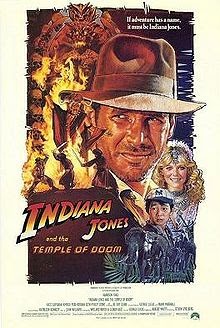
Indiana Jones and his accomplices - Willie Scott and Short Round - escape from an incident in Shanghai. They board a plane, but later discover it was owned by the crime boss they were trying to escape from. The pilots exit the plane and take all the parachutes with them. The plane is flying without a pilot over the Himalayan mountains. Facing death, Indiana Jones calmly figures out a solution to save them. They end up using an inflatable boat to land on the mountain and ride down the slopes into a raging river.
There's a lot we can learn from this scenario alone as there are many leadership elements woven into it. Companies sometimes try to operate without a strategic plan. Or the leadership team knows the plan, but hasn't effectively communicated the plan to employees. Also, there are alot of changes occurring in the environment - some changes are able to be controlled while others are not. To be an effective leader, it is important that we "lean forward" and embrace change. When problems or challenges occur, we need to approach them calmly and confidently, and develop creative solutions using our skills and talents.
2. Do the right thing.
After the dangerous ride in the inflatable boat, Indiana and his sidekicks arrive in the village of Mayapore, a desolate village in Northern India. The villagers ask for their help in retrieving a sacred stone that had been stolen from their shrine along with the village children who were enslaved at Pankot Palace. Indy and his team initially were focused on seeking out fame and fortune. However, after critically listening to the villagers, they inherently knew they needed to adjust their mission.
Businesses today need to operate with an internal compass and do the right thing. That may mean shifting the mission or objectives as the situation warrants. Today, many firms are reviewing their strategic plan quarterly because of all the changes in the environment that are occurring. Businesses need to do the right thing for their stakeholders - employees, customers, suppliers, and shareholders. Employees want to work for organizations with high ethical standards and integrity. Customers want to do business with companies that operate in an open, trustworthy manner. Companies that operate on a strong platform of trust and integrity will naturally attract shareholders and other funding sources.
3. Create an environment of trust.
During their final exit, Indiana and his team mates are trapped on a rope bridge over a river that is swimming with hungry crocodiles. Many businesses today are facing a similar situation; especially given today's fragile economic situation. Their finances and employee morale may be weakened. Competition in many industries is heating up - especially given the global marketplace we operate in currently. Indiana uses creativity and problem solving to ultimately lead his team out of harm's way. These are typical technical skills. But the piece that made the difference was trust. Indiana had worked to develop an "environment of trust" through consistent performance, communication and interpersonal skills. Today's leaders need to adopt a similar strategy to help their companies navigate the rope bridges and crocodile infested marketplaces.
There's a lot more insight in this movie. What are your thoughts? Did you see any additional insights?
Chrissann Ruehle's firm, Complete Business Strategies LLC, helps companies navigate competitive marketplaces and achieve a competitive advantage by streamlining processes, reducing operational costs, increasing efficiencies, improving productivity, and increasing both employee and customer satisfaction levels. She can be reached at chrissann@completebusinessstrategies.com or 513-443-2365 for additional information.
